
EPA-Approved Methane Detection
In January 2025, the U.S. Environmental Protection Agency approved Insight M, a Zeitview company's LeakSurveyor as a formal Alternative Test Method (MATM-004) for methane detection under the OOOO rule.
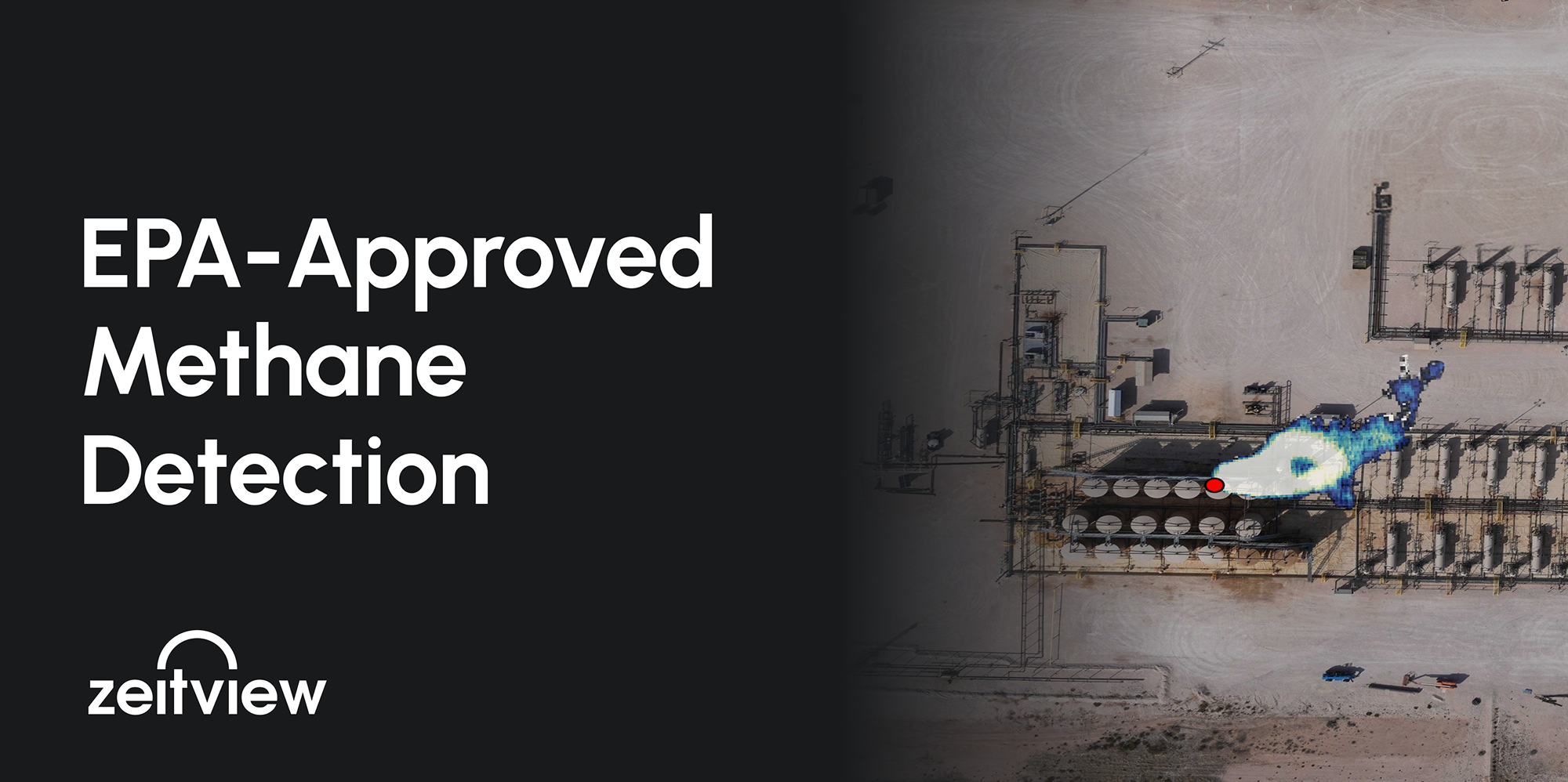
In January 2025, the U.S. Environmental Protection Agency approved Insight M, a Zeitview company's LeakSurveyor as a formal Alternative Test Method (MATM-004) for methane detection under the OOOO rule. It is one of a small number of aerial technologies EPA has reviewed and approved at the 10 kg/hr and 15 kg/hr detection thresholds. For operators evaluating an aerial methane program, as a standalone capability or as part of Zeitview's broader asset intelligence platform, this approval changes three things that matter to the bottom line.
1
Regulatory-grade methane detection, built into one platform
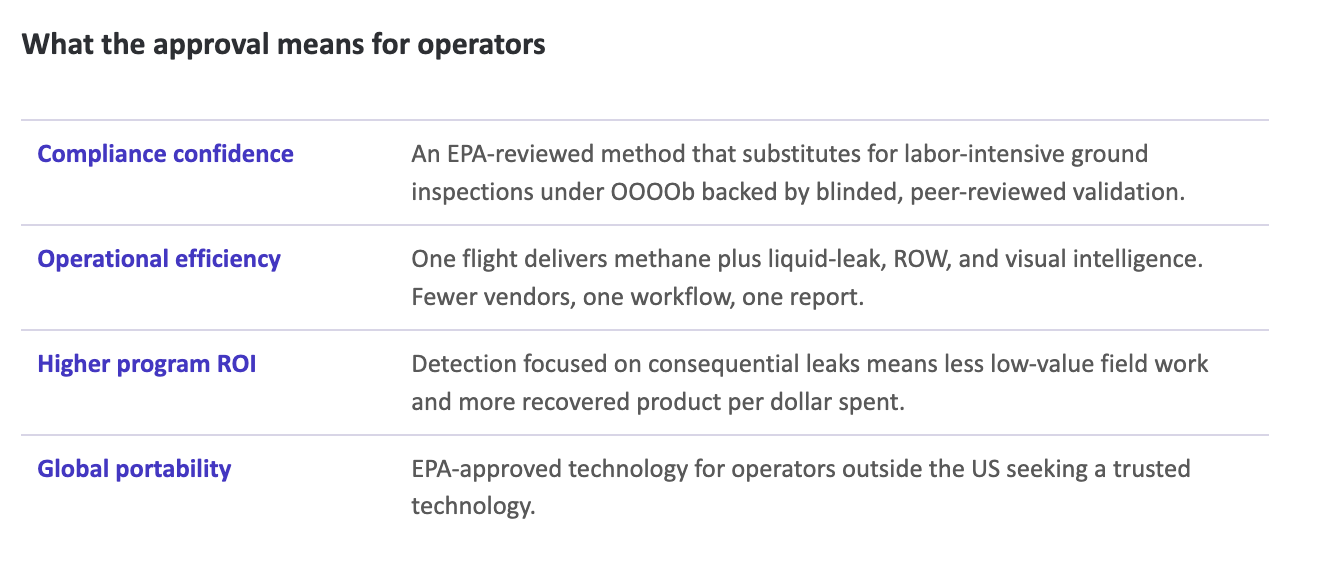
Methane detection is one of the most heavily regulated signals an operator manages from the air, and Zeitview's is EPA-approved. That approval doesn't sit in isolation. It is part of an integrated platform that combines liquid-leak, right-of-way, and visual-inspection intelligence. Operators get the compliance confidence of an EPA-reviewed methane method and the operational value of a full-asset intelligence program, from one vendor, in one workflow.
2
Detecting the leaks that matter
LeakSurveyor is approved at 10 kg/hr and 15 kg/hr, which is by design. A small number of large leaks drive most of both lost gas and total emissions; the distribution is famously fat-tailed. Detecting leaks at these thresholds means an operator uses their limited resources on emissions that actually move the needle. Programs that chase ever-smaller leaks generate a flood of low-consequence work orders, overwhelm field crews, and erode return on investment. Finding the leaks that matter is the higher-ROI strategy for operations teams.
3
EPA credibility
The EPA is widely regarded as a global benchmark for emissions regulation. For operators outside of the US, an EPA-approved detection method carries credibility that regulators, buyers, and partners recognize. As a method that cleared the bar set by the agency many other jurisdictions look to as the standard, it is a portable signal of scientific rigor.
1 https://www.epa.gov/emc/oil-and-gas-alternative-test-methods
2 Sherwin, E.D., Rutherford, J.S., Zhang, Z. et al. US oil and gas system emissions from nearly one million aerial site measurements. Nature 627, 328–334 (2024). https://doi.org/10.1038/s41586-024-07117-5
Turn Inspection Data into Action
Talk to an expert to see how Zeitview can support your inspection and maintenance workflows.